I wrote my weekly “What I’m Reading” post and scheduled it to publish on Sunday… July 26. The bad news: I wanted to push it out there on July 19. The good news: there will definitely be a post this coming Sunday since I can’t figure out how to reschedule its publication date!
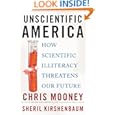
I downloaded the tome to my new iPod Touch with Kindle reader, and whipped through it in a day. My reaction overall is mixed. I do not see the problem as a lack of science literacy (has the general public ever really understood much about science? Or history? Or literature?) No, I see a lack of respect for science and scientists as the real issue. We need to regain public trust!
Adding communication classes to PhD work seems unlikely to solve the problem of a lack of respect for science. As much as I loved the work of Carl Sagan, having his clone about today would probably do little to reassure the general public. We were promised “better living through chemistry.” While DDT could zap mosquitoes and eliminate malaria, it had detrimental effects on the environment. The green revolution that has allowed the overpopulated world to be fed has taken its toll on the land. People now mistrust the agribusiness industry. In medicine, it seems like papers trumpet polar opposite results; the public can’t decide what to believe, and thus decides to believe no one.
The major complaint about the book over on ScienceBlogs regards religion. Mooney and Kirshenbaum take PZ Myers (Pharyngula) to task for “crackergate.” I have only been hanging out in the blogosphere for about 6 months, so I missed the original escapade. Basically, PZ, an atheist, showed photos of a defiled communion wafer on the blog a few years back. I remember hearing a bit about this in the mainstream media at the time. My reaction: (1) I guess he really wanted to piss people off; and (2) don’t the people whining about his “blasphemy” have something bigger to worry about? The chapter also discusses others in the blogosphere who are referred to as “the new atheists,” an in-your-face breed of nonbelievers. I have to agree with the contention that aggressive atheists turn off the holy rollers, especially when their faith is mocked. That is not the way to earn their respect; however, even if Carl Sagan came back from the dead to poetically tell them that the beliefs of their faith (creationism, etc) are wrong, it is unlikely that they will budge.
Ultimately, two antithetical forces are at work here. Science demands testable facts to support its theories. Religion is based on faith which requires belief without proof. Having grown up in the bible belt, I can tell you that new earth creationists are not swayed by the fossil record or any other evidence you present regarding the reality of evolution. They believe.
The book raised some interesting points and gave me things to think about on the airplane. It’s a good starting point for the discussion on attitudes toward science in the US, but I don’t believe it provides the complete answer we seek.


 Posts
Posts


