Friday, April 30, 2010

What’s In a Name? Uremia, for Example

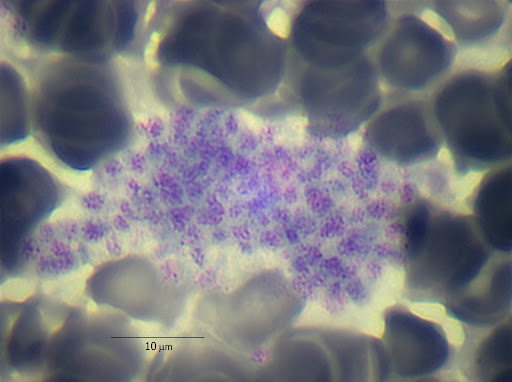
Uremia (or uraemia for my friends from the Empire) results from kidney failure. Accumulated wastes build up in the blood, resulting in a number of symptoms; these symptoms include loss of appetite, vomiting, headache, rashes, abnormal body odor, bleeding (due to platelet problems), and coma. The term “uremia” comes from “urea" which is a nitrogenous waste product measured in the  blood. Elevations in urea usually reflect poor kidney function, but a number of other conditions may raise blood urea nitrogen (BUN) Urealevels independent of kidney function. These include high protein diets, catabolic states such as sepsis, gastrointestinal bleeding, and a number of drugs (glucocorticoids most notably).

In general, BUN correlates well with uremic symptoms, but urea is not the cause of these symptoms itself. Supporting data comes primarily from a study of urea loading in chronic dialysis patients. Patients studied still had abnormal kidney function, so while high levels of urea did not result in “uremia” in otherwise well-dialyzed patients, other abnormalities could not be studied.Plts

Thanks to a Brief Communication in the May issue of Journal of the American Society of Nephrology (JASN) we now know that uremic platelet dysfunction is not due to urea.

Linthorst, Avis, and Levi studied platelet function in vivo and in vitro from 3 family members with familial azotemia. In this rare inherited disorder, blood urea levels rise to levels consistent with uremia but without reduction in glomerular filtration rate or accompanying uremic symptoms. All platelet studies fell within the normal range, ruling-out urea itself as the cause of platelet dysfunction.

Sometimes I am asked to dialyze patients with high BUN levels but relatively normal glomerular filtration rates to help with bleeding or other uremic possibilities. Now we know that lowering BUN is not itself beneficial because it is merely a biochemical epiphenomenon, not the real toxin. All thanks to an experiment of nature.

To Whoever Just Paged Me

Dear You Know Who You Are:Doctor

Right now, you are cursing me for not answering your summons immediately. Your emotions will rise over the next few minutes as I continue not to call, then you will calmly document my failure in a chart and on evaluations of my performance.

It is you who deserve the FAIL.

You paged me to 4 digits. At some institutions this is sufficient information for a page, but not in my professional life.

The Nebraska Medical Center includes prefixes 552- and 559-. Either of these is possible.

Children’s Hospital and Medical Center of Omaha uses 955- numbers.

I also get paged to other hospitals in town and dialysis units. And right now, I am not the doctor on call.

Short of trying every permutation with these 4 digits (which are not familiar to me), I cannot know where you want me. And I do not feel obliged to try.

Is your life really so onerous that you cannot punch an extra 3 digits into the phone when you page me? Really? REALLY? I guarantee it will take less time than waiting for my answer to your insufficient request.

Sincerely,

Pascale H. Lane, MD

Photo courtesy of PhotoXpress.

Thursday, April 29, 2010

Wisdom from the Swarm

I received the following in an email from my father, with several previous forwards in the headers. I have no idea who initially wrote it, so I cannot give proper attribution. What I can do is post it here as a more permanent source of edification.

Please note, I do not wish to imply anything negative about unemployed alcoholics. Alcoholism is a disease/disorder with genetic and societal components in its pathogenesis. I have nothing but compassion for those addicted to the demon rum and its cousins.

On the other hand, bankers…

An Easily Understandable Explanation of Derivative Markets

OLYMPUS DIGITAL CAMERA         Heidi is the proprietor of a bar in Sydney . She realizes that virtually all of her customers are unemployed alcoholics and, as such, can no longer afford to patronize her bar. To solve this problem, she comes up with a new marketing plan that allows her customers to drink now, but pay later. She keeps track of the drinks consumed in a ledger (thereby granting the customers loans).

Word gets around about Heidi's "drink now, pay later" marketing strategy and, as a result, increasing numbers of customers flood into Heidi's bar. Soon she has the largest sales volume for any bar in Sydney .

By providing her customers freedom from immediate payment demands, Heidi gets no resistance when, at regular intervals, she substantially increases her prices for wine and beer, the most consumed beverages. Consequently, Heidi's gross sales volume increases massively.

A young and dynamic Vice President at the local bank recognizes that these customer debts constitute valuable future assets, and increases Heidi's borrowing limit. He sees no reason for any undue concern, since he has the debts of the unemployed alcoholics as collateral.Coins in form of Dollar Sign
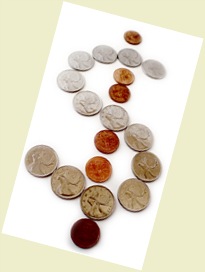
At the bank's corporate headquarters, expert traders transform these customer loans into DRINKBONDS, ALKIBONDS and PUKEBONDS. These securities are then bundled and traded on international security markets. Naive investors don't really understand that the securities being sold to them as AAA secured bonds are really the debts of unemployed alcoholics.

Nevertheless, the bond prices continuously climb, and the securities soon become the hottest-selling items for some of the nation's leading brokerage houses.

One day, even though the bond prices are still climbing, a risk manager at the original local bank decides that the time has come to demand payment on the debts incurred by the drinkers at Heidi's bar. He so informs Heidi.

Heidi then demands payment from her alcoholic patrons, but being unemployed alcoholics they cannot pay back their drinking debts. Since Heidi cannot fulfill her loan obligations, she is forced into bankruptcy. The bar closes and the eleven employees lose their jobs.

Photoxpress_366350 Overnight, DRINKBONDS, ALKIBONDS and PUKEBONDS drop in price by 90%. The collapsed bond asset value destroys the banks liquidity and prevents it from issuing new loans, thus freezing credit and economic activity in the community.

The suppliers of Heidi's bar had granted her generous payment extensions and had invested their firms' pension funds in the various BOND securities. They find they are now faced with not only having to write off her bad debt but also with losing over 90% of the presumed value of the bonds. Her wine supplier claims bankruptcy, closing the doors on a family business that had endured for three generations, and her beer supplier is taken over by a competitor, who immediately closes the local plant and lays off 150 workers.

Fortunately though, the bank, the brokerage houses and their respective executives are saved and bailed out by a multi-billion dollar, no-strings attached cash infusion from their cronies in Government. The funds required for this bailout are obtained by new taxes levied on employed, middle-class, non-drinkers who have never been in Heidi's bar.

Now you understand!!!

All photos courtesy of PhotoXpress.

Wednesday, April 28, 2010

So Long, Anaheim

Check-out time nears, and my laptop has to find its safe case for the trip home.UNMCfinalV042809.2 Tomorrow I will be back in Omaha, checking in with my lab peeps and seeing patients all afternoon.

Today’s post was going to be about the Renal Section Dinner last night, with video of the undergraduate and post-doc award presentations. Watching these folks try to line up for a photograph is hysterical; you will have to trust me for now.

I plugged my flip into the laptop this morning and started the upload to YouTube. Everything went well for over an hour. At 95% things were still going smoothly. Then, the message: problem with download.

I do not have time to start over now. Tomorrow I will try again with my hard-wire connection. I will make this available (because everyone’s parents deserve to see this sort of thing).

So stay tuned. I will prevail over my gizmos.

Tuesday, April 27, 2010

Congratulations Darwin (Not That Darwin)

Meeting fatigue has set in, and I am almost looking forward to the trip home tomorrow. Hot science still rules the Anaheim convention center, and there will be a tweet-up to celebrate the tweet-off tonight.

Darwin

This morning I dragged myself to an 8am session because a friend, P. Darwin Bell, PhD, of the Medical University of South Carolina, gave it. 

The Gottschalk Distinguished Lectureship of the APS Renal Section is the highest award a physiologist can receive (unless the Nobel committee comes calling). We are talking scientific rock-star status. And I know this guy! I had to rouse my sorry butt out for this one.

Carl W. Gottschalk, the namesake of the lectureship, came from Virginia but accomplished his breakthroughs during 41 years as a faculty member in the College of Medicine at University of North Carolina. Although he started out to be a cardiologist, the kidney grabbed his attention. Using micropuncture, he studied urine concentrating mechanisms and developed the countercurrent multiplier theory.

These scientific contributions alone would warrant naming stuff for him; however, Gottschalk also worked for patients with kidney disease. In 1967 he chaired the government panel that guaranteed payment for dialysis and kidney transplantation, at the time novel therapies, via the Medicare program. Millions of patients, including my own, are living productive lives because of these efforts by Gottschalk.

Focusing on tubuloglomerular feedback during his career, Darwin has changed many views of this process. The field of patch-clamping amazes me, and the technical stuff Darwin performs sometimes seems like science fiction. Clamping the macula densa? A bioprobe to confirm ATP secretion? Wow. A PubMed search reveals 113 publications today, a number that will rise in the future.

So once again, congratulations to Dr. Bell for a well-deserved and well-delivered lecture.

By the way, don’t forget the tweet-up to celebrate the tweet-off between Executive Director of the APS Marty Frank and Dr. Isis, 10:30 tonight in the bar at the Anaheim Hilton. I will announce the official winner about 6pm via Twitter. Good luck to all!

Sunday, April 25, 2010

Translational Research Needs

The critical first step in a research project occurs when the investigator chooses a model. Can the experiment be performed in cultured cells? Is a clinical trial in people necessary? Or will something in between be needed?

Something in between often means an animal model. I spent my training studying kidneys from people. The next questions I asked could not be studied that way; they required a setting with more control of variables, one in which the basic workings of the tissues could be dissected and explored. Would cell or tissue culture do? mouse Perhaps for some of it, but I wanted to examine puberty. This complex physiological period involves sexual maturation and the acceleration then cessation of linear growth. Our understanding of all its processes is elementary at best, so they cannot (yet) be modeled in vitro or in silico. I had to find a model.

At that time, a search of PubMed revealed a whole bunch of animal models of diabetes and its complications. The array of species and variables sent my head spinning. Now, genetically altered mice flood the field, each with its own particulars! On Tuesday mouse models of diabetic kidney disease will occupy 2 hours of symposium time at Experimental Biology. New models are published every month.

Sunday I learned about LAMHDI , the initiative to Link Animal Models to Human DIsease, while strolling the exhibitlogo hall. This emerging resource results from efforts of the National Center for Research Resources of the NIH. The goal is a simple yet comprehensive catalog of animal models, including the gene(s) affected (when available) and phenotype information. Similarities and differences from human disorders will be included as well.

Services available include the following:

LAMHDI Database Search - The LAMHDI Database Search is a search of data from partner websites. Currently JAX Mice and ZFIN have made their databases available to LAMHDI. A search returns pertinent information about animal models. Other websites with information about animal models are welcome to join as LAMHDI partners. We also invite you to share your feedback.

Animal Model Web Search - The Animal Model Web Search is a Google-like search of select websites that contain information about animal models. Currently LAMHDI indexes more than 75 sites with over 1.2 million pages that you may search with a single search strategy. Search results take you back to the originating site. Please suggest other sites that LAMHDI might include.

Featured Resources - Eventually LAMHDI will link all appropriate animal model databases in a single search. In the meantime, several additional resources have been identified as most useful to animal model researchers to supplement LAMHDI today. If you have other resources to suggest, please let us know.

LAMHDI may accelerate translational research by allowing the best model, not merely the one most familiar to the investigator, to be used. Right now the searches are dominated by rodent and zebrafish models. Eventually, the developers plan to include all species, and the nation’s leading primate centers are participating.

In addition to its potential to speed up bench to bedside, the database might also reduce the number of animals used in a given line of research. By selecting the best possible model for the experimental question, a series of less relevant experiments may be eliminated. Faster, better, and lower costs (in both dollars and animal lives)- sounds like a winner to me.

LAMHDI is described as a prototype. The developers want scientists to use it and give feedback. How is it working? What other resources should be included? How can we make this thing rock? So click on over there and try it out.

I will update the EB tweet-match throughout the day; my twitterfeed can be found in the right-hand column above.

Update on the Race

Runner

The first day of EB provided some sciencey razzle-dazzle and a whole lot of fun. The symposium on animal rights groups and the Pro-test movement produced lively discussion and useful information.

The Cannon lecture, given by Jeffery Fredberg, convinced me that a cell would feel like toothpaste if you could stand next to it and poke it with your finger. Of course, my favorite part of the talk was hearing my name over and over, since the unit of force is the kilopascal (after Blaise Pascal, not me).

Then the fun began with the Cannon reception and the President’s reception. I also got to meet a number of my online acquaintances face-to-face, which is always a treat.

Now, for what you clicked by to see. We are 24 hours into our tweet-match. Marty Frank made appeals to the masses for new followers, using his public persona and the authority that 25 years as Executive Director of the APS brings. He now has 154 followers for a net gain of 12. Dr. Isis countered by promising $1 for every new follower, up to $500, to the Porter Minority Development Fund. Dr. Isis really, really wants to win. As of 8am today, this effort will cost her $94.

So the goddess leads, 94 to 12. The final count will be made Tuesday evening, and a lot could change in 2 days and 10 hours. It’s up to you- go, follow, and tweet!

And have a great EB if you are with us in Anaheim.