Showing posts with label healthcare. Show all posts

Tuesday, June 15, 2010

Ethical Doctor Blogging

PalMD (of the White Coat Underground) tweeted a link to a 2008 post calling for a code of ethics for MD blogging. A study under review showed:

17% of the blogs include enough information for patients to identify themselves or their physicians

I occasionally blog stuff inspired by my patients. I never worry that they will identify me- if they don’t, I would be really worried! I use my real name and image, after all.

Anonymous Most of the time I am blogging a condition, such as volume overload or neonatal hypertension. While these posts may have been inspired by one or more in my care, the posts reviewed the conditions; no patient data of any sort were shared!

Could my patients identify themselves from my posts? A number of parents of hypertensive neonates probably believe their child inspired me to put fingertips to keyboard, but they cannot tell from that post. Only one post comes to mind in which the patient concerned would know for sure it came about because of him: the post on Page kidneys. Given the date of the post, the few vague items presented, and the fact that this patient knows he has the honor of being the first and only patient I have treated for this condition, he would figure it out.

I do not feel this post is unethical. Only someone who knows this person’s diagnosis and that I am his doctor can identify the patient. If they already know that much about him, they will learn nothing new from the post! The pathophysiology of Page kidneys, not the patient, remains the focus of the blog.

I would never try not to moan about inappropriate or inconvenient patients in a public forum. All physicians have “war stories” that we share; this blog is not the time or place. Occasionally I write about colleagues when either (1)I do not care if they read it and know it is about them; or (2) I have no clue who it is. Either way, no ethical issues apply. These situations are like complaining about jerks in traffic.

I have to go see a patient now. I am not going to say who, where, or what, though. And this kid will never know s/he inspired my closing today!

Image above is my daughter about 20 years ago. No patients were compromised in the creation of this post.

Thursday, May 6, 2010

Jumping Through the Hoops to Make Bones Better

My nurses do a great job keeping the clinical service running, especially handling prescriptions and the nonsense sometimes required by insurers. Treating children with chronic kidney disease means prescribing a lot of medications not approved specifically for use in children. Sometimes we must jump through flaming hoops to get the job done.

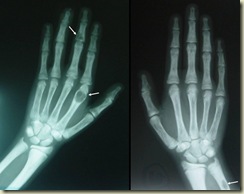
hyperparathyroidism-718x567 Today, they had a new issue.

We prescribed calcium acetate, a medication used to bind phosphate. As the kidneys lose function, they cannot eliminate phosphate from the body. Dietary reduction helps, but since most organisms store energy in phosphate molecules like ATP, it cannot be eliminated entirely. Patients can take calcium or other medications with meals to bind to the phosphate in the gut. Calcium phosphate cannot be absorbed into the body. Instead, it is fecally excreted (or pooped out, as I tell my patients). Excess phosphate (along with lack of the active form of vitamin D) causes bone problems in many patients with chronic kidney disease, including secondary hyperparathyroidism (shown in x-ray).

Being generally cognizant of insurance limitations, we generate most prescriptions for the generic drug, in this case:

Calcium Acetate 667 mg three times daily with meals

Today, we received a fax:

Patient must fail a 2-week trial of PhosLo before calcium acetate can be prescribed.

PhosLoSo what is PhosLo? The trade name of calcium acetate 667 mg tablets.

Yup, same stuff. So we wrote back and gave permission to prescribe PhosLo. Duh!

Thank you, Nebraska Medicaid, for providing today’s blog fodder. And a lot of head-shaking in our office!

Friday, April 30, 2010

To Whoever Just Paged Me

Dear You Know Who You Are:Doctor

Right now, you are cursing me for not answering your summons immediately. Your emotions will rise over the next few minutes as I continue not to call, then you will calmly document my failure in a chart and on evaluations of my performance.

It is you who deserve the FAIL.

You paged me to 4 digits. At some institutions this is sufficient information for a page, but not in my professional life.

The Nebraska Medical Center includes prefixes 552- and 559-. Either of these is possible.

Children’s Hospital and Medical Center of Omaha uses 955- numbers.

I also get paged to other hospitals in town and dialysis units. And right now, I am not the doctor on call.

Short of trying every permutation with these 4 digits (which are not familiar to me), I cannot know where you want me. And I do not feel obliged to try.

Is your life really so onerous that you cannot punch an extra 3 digits into the phone when you page me? Really? REALLY? I guarantee it will take less time than waiting for my answer to your insufficient request.

Sincerely,

Pascale H. Lane, MD

Photo courtesy of PhotoXpress.

Thursday, March 18, 2010

A Major Award and a Major Headache

Last night, my husband won Specialty DSCN0069Physician of Distinction for The Nebraska Medical Center. He poses with his plaque and Beth Pfeffer, the nurse manager of the Diabetes Center and Service Line who nominated him.

One bonus of the evening was the keynote address by J. D. Kleinke, medical economist extradordinaire. His views on healthcare reform provided further support for my own, and one of his books sounds like a must-read: Oxymorons: The Myth of U.S. Health Care System (2001).

I hoped to post this morning so my husband’s achievement could be easily shared with friends and family; unfortunately, my patients did not allow it. When I finally got to a computer, I skimmed one of my regular reads, White Coat Underground. The post today raised an interesting question: would health care reform cause physicians to leave medical practice?

I will let you read the original post, because the question (and supposed answer) are not, well, real.

I do know something that will make physicians consider leaving medical practice, though: Maintenance of Certification (MOC).

In the old days (before 1985), a medical student graduated and took one of two courses of action. After 1 or 2 years of rotating internship, most states would license an MD for general practice. Alternatively, one could pursue residency training for a number of years and then sit for board certification examinations in specialties. These specialties included primary care (Internal Medicine, Pediatrics) and more specialized fields (Endocrinology and Pediatric Nephrology for my household). Once you passed the test, you were board certified forever.

A few years back, someone decided that certification should not be forever. Boards should have processes to certify that a physician’s knowledge and skills remained current. I was in the first group in pediatrics that could not get permanent certification (we became board eligible in 1988).

It sounds reasonable to require continuing medical education (CME), and state licensing boards have required documentation of such coursework for years. Sitting through a lecture did not insure learning, though. This new process would assure specialty-specific CME, along with the examination to document the accomplishment. So far, so good.

But then the powers that be decided that knowledge alone does not a physician make. Practicing medicine requires skills not tested by traditional multiple choice exams. Thus, MOC was born.

MOC includes (1)maintaining unrestricted medical licensure; (2)completing qualified education modules; (3)practice improvement projects and patient surveys; and (4)secure examination.

My husband is currently performing a practice improvement module. A quality measure has to be first defined, and then measured via a chart audit. Once measurements are made, an improvement project can then be implemented. This takes time and person-power to accomplish. In academia, he has time to pursue this, along with support staff to help carry it out. Those in private practice will have to clear patient schedules to perform these tasks (loss of revenue), and/or hire personnel to perform them (increased costs). Either way, these requirements have negative economic impact on a practice.

Will physicians continue to practice after a couple of rounds of MOC? I believe most will; after all, taking care of patients drives most doctors to “doctor.” Will doctors maintain certification? A number of insurers require MOC for reimbursement of specialty services, so I suspect many will. I guess a fair number will not, especially in primary care. Once your patient base is set, they are unlikely to ask if you have maintained certification. Many doctors may find that patients prefer to have them more available, rather than working on MOC.

I recertified in general pediatrics once. At the time recertification was an open-book exam via personal computer. I learned a lot of things that I had missed while devoting myself strictly to my subspecialty. It was a great experience, and I had no ill will about doing it (not even the cost). I will no longer be maintaining this certification for a number of reasons, especially the fact that I have no general pediatric patients for the required survey. I am enrolled in the Pediatric Nephrology MOC program.

MOC looks good on paper, but it will not be easy to complete, especially in a clinical practice environment. Only time will tell if physicians maintain certification and if MOC makes any difference in physician performance or patient satisfaction.

Lack of data never stopped anyone from enforcing a course of action.

Friday, January 8, 2010

HIPAA Meets Politics Via Twitter

The following story hit my mailbox yesterday, courtesy of HIT News. twitter-logo Seems a worker in Mississippi has lost her job by getting a little snarky with protected health information via twitter:

A simple tweet has sparked a HIPAA compliance and public relations mess at Mississippi’s University Medical Center, and an administrative assistant is out of a job as a result, reports a local TV station.

The controversy began when Mississippi governor Haley Barbour posted this tweet on his Twitter page: ”Glad the Legislature recognizes our dire fiscal situation.  Look forward to hearing their ideas on how to trim expenses.”

“Schedule regular medical exams like everyone else instead of paying UMC employees over time to do it when clinics are usually closed,” tweeted UMC administrative assistant Jennifer Carter. She had heard that the governor had come into UMC for a physical one Saturday three years ago, and that the clinic had to be staffed up with 15-20 workers just for his visit.

Next: Carter paid dearly …

Two days later, Carter was in UMC’s compliance office for violating HIPAA’s privacy provisions. The Compliance Department told her the Governor’s Office had tracked her down and told them to deal with her,” according to WLBT.

Carter says she was suspended without pay for three days and “strongly encouraged to resign,” which she did. She says she ”wasn’t really jabbing” at the governor.  ”That’s just what people do on Twitter.”

I explored a number of the links provided on the site, yet I have one big unanswered questions about the event:

Did the governor publicly acknowledge his physical or its results at the time of this appointment? Those in the public eye, especially in an election year(Barbour is up for re-election in 2011, so this event took place during his last quest for office), often have their physicals and then assure the public that they are in great health. If it was public knowledge that he had the physical, then I am confused about where the break in protected information occurred. Carter said nothing about his health, merely commented on the “unnecessary” costs the state may have incurred. Given security issues with a prominent government official, the situation described may have been the least disruptive for the medical center’s other patients. It could even have been a cost-effective measure when all other factors were considered.

If the appointment was not publicly acknowledged, then Carter’s tweet was clearly a violation of HIPAA, since knowing the date and circumstances of a medical procedure can compromise one’s privacy. Twitter_Birds_rasterizedHer defense- she ”wasn’t really jabbing” at the governor- seems silly. Clearly, she was questioning the governor’s judgment and priorities. Such “jabbing” would be protected speech… if a healthcare appointment weren’t involved.

Social media, like twitter, allow us to find our audience as never before. We all must remember our legal and moral responsibilities, and use these freedoms wisely.

Tuesday, November 10, 2009

More Information About GWIMS

In last evening’s post I described GWIMS, the Group on Women in Medicine and Science of the AAMC. Becoming an official group recognizes the importance of women’s participation in our academic enterprise. I now have some more “official”language about the role of GWIMS:

The GWIMS will serve as a national forum to advance women’s success in medicine and science by addressing gender equity, career advancement, awards and recognition, and recruitment and retention. Deans have been directed to designate institutional representatives who advocate for women’s advancement in leadership, education, research, clinical practice and administration to join the GWIMS. This new forum replaces the former AAMC Women Liaison Officer (WLO) network.

Each school should have one primary GWIMS representative serving as a point of contact to the AAMC. GWIMS is open to anyone who has an interest in advancing women’s success in medicine and science. If you are interested in becoming a member of the GWIMS or are a former WLO, please communicate with your dean that you wish to become a member of the GWIMS and have the dean’s office forward a comprehensive list of all those interested to the GWIMS office at gwims@aamc.org.

For more information about GWIMS, please visit www.aamc.org/gwims or call 202-828-0647.

Tuesday, September 29, 2009

Why Not Everyone?

For a while I have considered posting on “the public option” in healthcare that I am most familiar with, the Medicare End-Stage Renal Disease Program. The history of this disease-specific program is fascinating, and I think it provides a good example of what “the public option” could be (and why private insurance companies are scared).

See, you can get public coverage now if: Photoxpress_3007312

  1. You are employed by the government (like congress)
  2. You are or were in the military
  3. You are of “retirement age”
  4. You are disabled
  5. You are poor with dependent children or you are a dependent child
  6. You have kidney failure

That’s a whole lot of health care already run by the government. In my experience, it works pretty well with far fewer headaches than many of the private insurers generate.

I was toying with a post about this topic; however, someone has provided a far more compelling story than I could tell as a physician. Jennifer Nix in Salon tells us the history and realities of the Medicare ESRD program through a family saga:

My family's 36-year journey with end-stage renal disease -- the only long-term, chronic disease classification for which the U.S. government provides insurance coverage, regardless of age or income -- offers a telling case study into what once met Congress' standard of an unequivocal, moral imperative to provide public-financed health insurance. My family history mirrors exactly the period from 1973 to 2009, during which this entitlement program has allowed access to life-saving dialysis and kidney transplants, treatments previously denied to all but a very privileged few.

Read the full story: I love my socialist kidney.

We have identified a number of groups for whom we, as a society, feel a moral imperative to provide health coverage. Isn’t it time that a nation with our wealth and spirit extends that opportunity to all of our citizens?

Photo courtesy of PhotoXpress.

Monday, September 21, 2009

Blogging from the Airport

I am seated in Eppley Airfield in Omaha, awaiting my first flight of the day. CNN plays on the television, another story about H1N1 flashing by. The accompanying footage has a bench with a lot of Photoxpress_3290805pretty colored liquids being pipetted from flask to flask.

It does not resemble any virology lab I have seen. And no one is masked in the footage…

I guess I am thinking too hard again. Time to traipse through security and wait at the gate.

Photo courtesy of PhotoXpress.

Saturday, September 19, 2009

Something To Cheer About?

A friend sent me this ditty a few days ago:

I cannot figure out what US citizens are so afraid of losing through meaningful healthcare reform. It’s not like our current nonsystem gives us longer lives or costs less than other countries…

Monday, July 27, 2009

Lies, Damn Lies, and NO Statistics

Last week I listened to some of the Sotomayor hearings on CNN. The hearings were about as I expected, but the ads between sessions were frightening. A Canadian woman was on the tube telling me how she would have died of a brain tumor if she hadn’t traveled to the US for treatment.

HealthCare I have a number of Canadian friends and acquaintances, most of whom are physicians. They LOVE the Canadian system. They know that every patient they see is covered. Layers of administration for preapprovals and claim resubmissions have been peeled away from the process (I have spent 45 minutes on the phone to get non-tablet forms of medications approved for a pediatric patient). And they don’t have to inflate their base charges so that the 80% rate someone negotiated will cover the actual costs incurred. A couple of them have said that Michael Moore got their system right in Sicko. Even those who experience the system as patients like it. Yes, they pay for it with taxes, but they don’t have to worry about losing their coverage with their job.

This ad just didn’t sound right. Elective procedures often involve waits (like they can in the US), but I had never seen a documented life-threatening emergency put off that way. Then I heard this interview  with Maureen Taylor, a health reporter for the Canadian Broadcasting Corporation, on NPR’s On the Media. The full clip is available, and I’ve pasted relevant material from the transcript below, just in case you’re the impatient type:

Shona Holmes is a woman in commercials who says that she would have been dead within a year because doctors in Canada were making her wait six months to have her brain tumor removed. Tumor, in its strictest sense, means a swelling or enlargement. In Shona’s case, it was not cancer:

“What she had was actually a cyst in her pituitary gland, which you can call it a tumor if you want, but it’s not a cancerous tumor. And it was causing her some hormonal problems and pressing on her optic nerve to give her some vision problems.

This is not a life-threatening thing. I don't deny that it would be very disturbing to have vision problems and be told that we're not going to be able to operate on that for six months. So she went to the States and had this done. But nobody at the Mayo Clinic is claiming that they saved her life, yet this is being reported in the American media as a woman with brain cancer who would have been dead had she let the Canadian health care system prevail.

It just makes me angry that the media isn't looking into this a little more. It wasn't hard for me to find out what she actually had and do a little research on it. People, I'm not walking over a lot of dead bodies here on my way into the studio.”

Many of the other commercials feature patients seeking experimental or nonstandard treatments which would generally not be covered under present private insurance in the US.

Healthcare should be a right, not a privilege. Calling what we have in the US a “system” is generally inappropriate, because “system” implies some sort of order or sense. Most healthcare workers will tell you that rhyme and reason are not part of the way we fund medicine in the US.

Forty years ago, we put men on the moon. Today, we still have people who can’t get basic healthcare. Embarrassing, really. Yet we are listening to lies about a real system that works. Even more embarrassing.

Wednesday, March 11, 2009

Required Reading on Health Care Reform


As a physician, there are many out there who would assume that I want to keep our current US health care "system." They couldn't be more wrong. Daily I experience the waste and inequities of our state of affairs, and I am appalled.


Required reading is this week's cover story from Time Magazine. A health care reporter, Karen Tumulty, describes the hell her brother went through when he was diagnosed with chronic kidney disease, even with an experienced medical reporter in the family to work through the system (or lack thereof). This story is not an isolated incident; this happens to thousand of working Americans every day! It is especially tragic to me when a parent has to change jobs and their children with pre-existing conditions cannot be covered by a new policy.


From my professional perspective, the waste involved with multiple payors is incredible. At our institution we have many people whose job is to figure out what is covered for each patient and to what level. Some patients have multiple sources of coverage. While this sounds like a good thing, what usually happens is that no payor wants to cover anything. When I see the number of people employed just to figure out this transaction, I can't help thinking about how many people could be covered with the funding for these bureaucratic expenses.


Another frustration is the nit-picking that goes on for trivial expenses. One recently discharged patient needed a medication she had previously taken as a pill in patch form. She had been admitted several times because she would vomit the pill and her health issues would decompensate. I had to spend 45 minutes in voice mail hell to get the switch approved. The cost of one admission would cover the difference between pill and patch forms for a long, long time. I can't imaging being a patient, someone not familiar with the system, and trying to jump through these hoops. I'm afraid I would just give up - and many patients do, to the detriment of their health.


The job of the insurance companies is to make money for investors, just like any publicly traded corporation. Spending money on healthcare reduces profits, even if it makes you, the insured person, better. If patients truly had choice, they would pick companies that covered them better over time and others would go out of business. The choice is not in the hands of patients but their employers who are looking at the needs of the group and the business, not the individuals. We need a drastially different approach to healthcare in this country. It's time, America.