Showing posts with label science. Show all posts

Wednesday, July 21, 2010

Seeing the Opportunity in Human Execution

The current issue (16 July) of Science includes an article on mutations that protect from sleeping sickness but promote kidney disease in people of African descent. As a nephrologist, I know this is a BIG STORY. Several press releases have made their way to my editorial in-box about this cool and significant genetic-association study.

I am going to blog about something else in the issue (full article here).

Anatomy sometimes seems like the poor stepchild of the medical school. You have to keep it around, but it lacks the sexy research found in biochemistry or cell biology. When medical schools combine departments to save resources, anatomy often goes under the axe.

Turns out, a lot of what we know about anatomy may be ethically tainted. In the early 20th century, Germany and Austria produced some of the world’s finest scientists in many disciplines (rocket science, anyone?). As the Nazis rose to power, anatomists developed arrangements with executioners to obtain cadavers for dissection, instruction, and research.

In 1938, senior anatomists at the University of Vienna began an unusual arrangement: They worked closely with local Nazi officials to obtain corpses for teaching and research, receiving the bodies of prisoners shot in the Gestapo rifle range or guillotined in Vienna's assize court building. So many corpses were transferred that Viennese authorities ran a special streetcar, dubbed the "Death Transport," between the court and the medical school in the early morning. If the medical school morgue was full, court officials postponed the executions. Viennese physicians secured at least 1337 bodies of Nazi victims this way, according to a report issued by the University of Vienna in 1998.

I have emphasized that one sentence because this degree of coordination between executioners and medical schools amazes me, even given the atrocities of the era.

The article goes on to describe other ethical breakdowns during the Nazi years, including studies by Hermann Stieve on the effect of stress (scheduling of one’s execution) on ovulation and menstruation:

He sent an assistant to Plötzensee to obtain from prison doctors the women's medical histories, as well as data on their menstrual cycles and reactions to the announcement of their execution date. He also persuaded Plötzensee's director to continue conducting executions in the morning, despite the daylight air attacks in Berlin, so tissue samples could be processed the day of the execution.

A sidebar article discusses Pernkopf’s Atlas, considered by many the gold standard of anatomical illustration; however, Pernkopf and his artists were avid Nazis. Many of these dissections and illustrations came from the executions described above.

Should we still use these illustrations given their tainted past?

I say no. The examples shown are gorgeous, no doubt, but I managed to learn enough anatomy to practice medicine via other sources. Today, Amazon lists 41,906 results when I searched “anatomy” in their books section. We can live without Pernkopf.

I encourage everyone to read the original articles by Heather Pringle, author of The Master Plan: Himmler’s Scholars and the Holocaust (2005). 

What are you waiting for? Click those links and READ!

Thursday, June 3, 2010

Serving with Pride

VA

Once again I write my update from the Omaha Airport. Today I fly to Washington, DC, for a study section for the Veteran’s Administration research program. Physicians and scientists with appointments to a VA hospital can apply for grants to support research that betters the lives of veterans. Since veterans are generally people, much of this work will benefit everyone.

The process began several months ago with an email. I had finished a regular term on this study section last May, but they needed me again for the session tomorrow. Over the next couple of months I signed agreements about confidentiality, ethical conduct, and travel reimbursement. I then received a spreadsheet with information about who submitted a proposal and what it was about. Based on that information, I could declare a conflict if I had collaborated with someone on the grant. I could also indicate applications I really wanted to review and those that I did not wish to consider. About 2 months ago I received my assignments and the current scoring guidelines.

I generally read all of my applications through once for a general feel about them; you might be surprised how well this first impression correlates with the final score generated by the group! Then I read each in more detail and evaluate each of the following areas:

  • Significance: Does the study address an important problem? If not, then why should limited resources go to it?
  • Approach: Will the proposed experiments address the problem? Are they the best way to address the problem?
  • Innovation: Are the studies novel, or do they merely replicate earlier work?
  • Investigators: Are the investigators well-trained and capable of performing the experiments based on their prior accomplishments?
  • Environment: Does the VA Hospital and associated university have the facilities necessary to perform the studies?
  • Feasibility: Can this be done? Photoxpress_2973759
  • Overall Evaluation: Will the proposal lead to important new knowledge? Do its significance and strengths outweigh any identified weaknesses?
  • Ethical/Safety Issues: Could anyone be harmed by these studies? Have appropriate institutional oversight procedures been followed?

After writing up each of my assignments, I then assigned them a score from 1-5 using defined criteria. Three of us reviewed each proposal and posted our scores and critiques on line. On some of them, all three of us gave nearly the same score; others have a bit of spread that will have to be resolved when we discuss them face-to-face tomorrow.

Study sections can be inefficient and unfair, but thus far they are the best system we have for doling out limited funds. I am proud to participate.

I hope the people reviewing my current proposal today and/or tomorrow feel as positive as I do right now.

Piggybank image courtesy of PhotoXpress.

Thursday, May 20, 2010

Words of Wisdom from Danae

Last week DrugMonkey posted that the NIH ain’t doin’ it right if a certain portion of grants do not fail. In a time of tight paylines, a back-the-sure-thing, nobody-ever-got-fired-for-choosing-Microsoft mentality prevails, and science gets more of the same. Big labs get more grants to grind out lots of incremental papers (“so productive”), while smaller labs get less, thus assuring inadequate productivity for at least another funding cycle (hey, bitter is the new black, so don’t judge me).

In my experience on study sections, reductionist proposals receive the most enthusiasm. Drilling down into a specific cell/pathway/molecule appeals more than looking at the whole animal or tissue level. Apparently, “mechanism” can only be truly delineated at the cellular level. Never mind that no one in my clinic exists as an isolated packet of cells.

I am not saying that such very basic, mechanism-of-life work is unimportant; this type of science has driven a whole world of biomedical advances in the last few decades, and we need to keep funding it. We just should not lose sight of the bigger picture and the need to keep our minds open.

I just got back in town, and I need to catch up on things. This blog post did not top my To-Do List. I was delighted to see this when I logged on this morning, and just had to write:

NonSeqScience

The motto of science should be “expect the unexpected,” yet reviewers of grants want “the sure thing.”

OK, you should have enough preliminary data to show that you can perform any new or unusual technique (this generally does not include anything in a kit). You should have data to show that you are facing west, so to speak. Not necessarily a peer-reviewed paper, but something supportive (although at least one peer-reviewed paper supporting your idea is generally necessary for an R01 in the present funding climate).

Just don’t forget to look east occasionally, because that might be even more interesting than the sunset. And reviewers, please do not kill a proposal for looking east as well as west.

The next big advance in any field will be completely unexpected – or we would have found it already.

Tuesday, May 11, 2010

Excuses and Delays

Yesterday my first PhD student’s comprehensive exam kept me from blogging (she passed, of course), and today I must finish a journal club presentation. Journal club sounds like it might be some sort of fun, exclusive activity for which you wait in line; if you aren’t dressed correctly, the boPhotoxpress_5528831uncer may not let you participate.

Of course, I would be dressed correctly for any occasion!

In reality, journal club provides an important piece of biomedical training, honing skills in critical appraisal of the literature. Participants (me, this time around) select an article to critique.

The process proceeds similar to manuscript review. We discuss the experimental question, the methods used to collect and analyze the data, the interpretation of the data, and how it all fits together with everything else we know. For established physician-scientists such as myself, journal club is a good way to review a topic and discover something new. For trainees, critiquing studies helps develop a sense of “the way things are done.” Science and medicine, especially when written, have their own language and conventions. Learning how to fit into this culture is part of the training- along with learning how to conduct and critique research. Oh, and picking up a bunch of facts as well.

Tomorrow I will provide a brief post on my article.

Image courtesy of PhotoXpress.

Wednesday, May 5, 2010

A Good Example

Photoxpress_612445 Today I am reviewing a manuscript that includes a qualitative research component. A while back some bad qualitative research rocked the blogosphere, so I thought I would strip the identifiers and provide an example of what good qualitative research sounds like in the methods section:

Two of the authors independently reviewed the open-ended responses to questions…/… and developed a coding scheme. After discussion, a common coding scheme was developed and subsequently reviewed by a third author... The original two authors then independently coded the database.

So scheme developed, confirmed by another researcher, and then applied. That is the way you do a qualitative study.

Art courtesy of PhotoXpress.

Saturday, April 24, 2010

Lost in the Performance

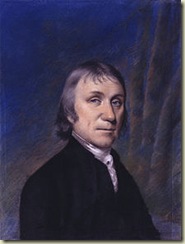
Last week NPR ran a story about a poem, reportedly one of the first pieces of animal rights literature. Ann Barbauld, an assistant in the lab of Joseph Priestly, penned it:Priestly

It was, after all, 1773, just a few years before Lexington, Concord and the Declaration of Independence. On both sides of the Atlantic, "inalienable rights" were a rallying cry, and Anna, a young wife and poet, decided to write a protest poem. She called it "The Mouse's Petition to Dr. Priestley, Found in the Trap where he had been Confined all Night."

NPR included commentary from a historian on the concept of “inalienable rights,” and an actress read the poem with great emotion.

Priestly himself gets a bit lost in their discussion:

There were lots of mice in Priestley's lab. He had made his reputation as one of the first scientists to identify oxygen. He studied mice to figure out what happens inside animals as they breathe. This meant he regularly opened them to examine lungs, veins, arteries, to see that blood changed color when it moved through lungs. And since tuberculosis -- or "consumption" -- was the scourge of that era, lung research seemed like a valuable thing to do.

Priestly described oxygen, photosynthesis, and carbonation. He also founded Unitarianism. His support of controversial ideas often necessitated moves to other countries or even continents; he died in the United States because he supported both the US and French revolutions.

Some of his most famous experiments are detailed at this web site. He collected oxygen and found that a container of it burned longer and kept mice alive longer than an identical container of air. He also demonstrated that plants can produce oxygen; a closed container would kill a mouse, but a plant in the same closed container allowed the mouse to live.

Priestly’s ongoing belief in phlogiston theory kept him from developing his observations to their full potential and eventually excluded him from mainstream science. Antoine Lavoisier eventually “discovered” oxygen as well and recognized it as an element, discrediting phlogiston theory along the way. These events led to the development of modern chemistry. The American Chemical Society arose from a commemoration of Priestly’s work a few years after his death.

Today, combustion is a chemical reaction. Air contains oxygen that enters our blood through our lungs. Plants renew oxygen in the air. All of these facts result, at least in part, from Priestly’s experiments with mice.

People and animals still die of lung diseases. We still have much to learn about the way bodies work. There are still questions we cannot answer without using animal models. Today, though, our animals get much more protection. Institutions that perform animal research supervise scientists and require protocols that use the lowest number of animals possible. Most laboratory animals come from commercial sources and are bred solely as research subjects; rats and mice are generally not trapped in the wild as they were in the 1700s. Experiments expected to end in the death of an animal, such as Priestly’s, require extra levels of justification and supervision. While most animals do succumb to experimental efforts, death most often occurs under anesthesia or via another approved method of euthanasia. Food and water are provided. Environments are enriched. Pain and distress are minimized, as required by law.

Animal research remains an important tool for understanding biology and disease. Without it, progress in a number of disorders will be slowed or stopped. I am glad NPR told me about this historically important piece of literature; I just wish they would have pointed out the importance of Priestly’s experiments; surely they justify the loss of some mice.

Thursday, April 22, 2010

Paging the Page Kidney: Biomedical Musings

I recently saw a medical condition I had never encountered before. A teenager had been diagnosed several months ago with hypertension (high blood pressure) by his primary care physician. After dietary modifications failed to lower his readings to acceptable levels, an ultrasound showed an abnormality in one kidney. MRI further defined a mass within the kidney consistent with a resolving hematoma, or subcapsular bruise.

Irvine H. Page demonstrated that tightly wrapping a kidney with cellophane would induce hypertension in 1939; in his honor, this type of kidney problem is called a Page kidney. More information, including an MRI and pathologic specimen, can be seen in this feature in New England Journal of Medicine.

So how does wrapping a kidney in cellophane or adding a subcapsular mass cause high blood pressure?

Page Kidney

The left image shows a diagram of a normal kidney with its artery entering and branching. Repeated branches occur until each vessel ends in a filtering unit or glomerulus. The capsule forms the large border around the pink “meat” of the diagrammed kidney; this firmer scar-like structure holds the organ in place. If bleeding occurs within the kidney, from a blow to the flank or a kidney biopsy, a bruise may form under the capsule as in the image on the right. This bruise or hematoma cannot push the firmly made capsule out, so it squishes the working part of the kidney, including blood vessels in the region.

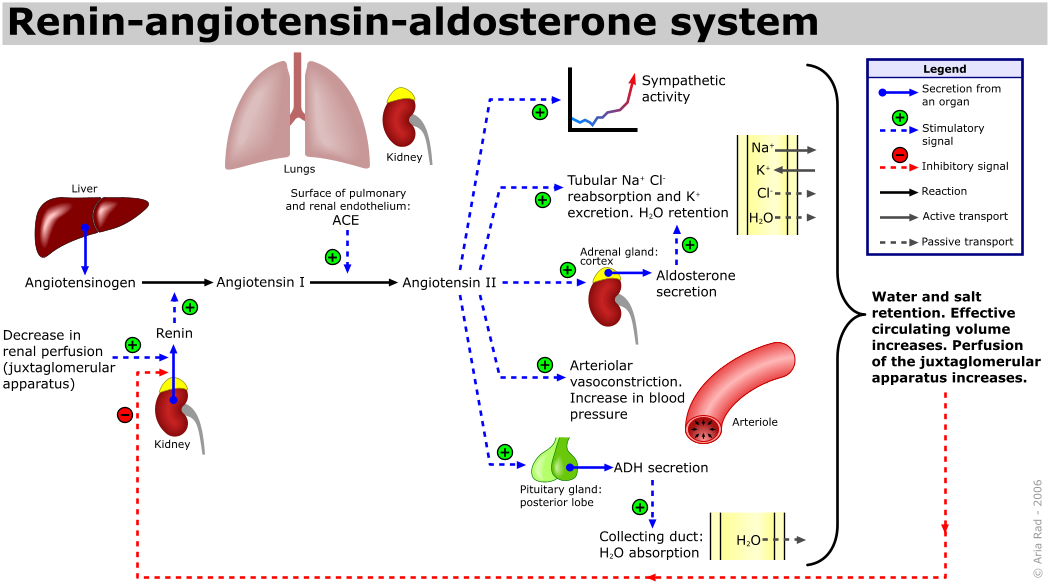
When the kidney sees a reduction in blood flow, it cannot tell if low blood pressure in the body or compression by a hematoma (or some wacky scientist wrapping it in cellophane) has caused the problem. The blood vessels near the glomeruli respond by pumping out a hormone called renin that turns on the angiotensin-aldosterone system, raising blood pressure throughout the body).

Thus, a squished kidney causes high blood pressure. This form of hypertension can often be cured by draining the hematoma or removing the offending kidney.

And 25 years after completing medical school, I still see new things!

Tuesday, March 16, 2010

Qualitative Quap

The blogosphere has been buzzing about a recent publication on science blogging. The study by Inna Kouper is “an attempt to understand current practices of science blogging and to provide insight into the role of blogging in the promotion of more interactive forms of science communication.”QualRes

She examined eleven blogs.

I must admit I have trouble getting my brain around qualitative research. To my mind, research should provide information that can be generalized or applied in some way. Many forms of qualitative research cannot be used this way.

I asked one of my colleagues who really likes this sort of analysis what he thought of a sample size of 11 for this study. He said that was a reasonable number depending on the goals and methodology of the study. A qualitative study would not necessarily require a random sample of a certain percentage of blogs; that’s quantitative research thinking!

So I sent him the paper.

He was not impressed.

[One] disturbing part of this is that the methods do not mention how or why the particular blogs were chosen.  There is no consistency and no specific criteria that is detailed.  That is important for any qualitative analysis because there should be a specific phenomenon that is being analyzed.  This author very loosely commented that the purpose was to look at science-related blogs and the responses. That is very broad and does not guide one to believe looking at only 11 blogs is useful data....even in qualitative studies.

He also comments that the qualitative analysis theory the study used was exceedingly difficult to find within the manuscript. His most damning criticism:

[More detail is needed on the] data reduction that was done.  Yes, the author details how items were coded.  However, this coding process was not validated by an independent reviewer to ensure they were coding in a similar manner.  That is the one way to ensure reliability and credibility of the data collection and data analysis process.  This was not done at all from what I read.

Qualitative research is a different world, but even in that world there are problems with this work.

For earlier posts on this study see:

A Blog Around The Clock

DrugMonkey

On Becoming a Domestic and Laboratory Goddess

I realize I have not credited my qualitative statistics expert; I will let him “out” himself, if he desires, in the comments section.

Saturday, February 20, 2010

Too Smart To Care?

A lot of us in “the ivory tower” have paid attention to the case of Amy Bishop, a junior faculty member at University of Alabama-Huntsville who “allegedly” shot several members of the department that would not grant her tenure. Huntsville-ColorAs the week progressed, more behavioral anomalies and interactions with the law have come out, suggesting that Amy Bishop may not be the most stable person on the planet.

Her lawyer summed things up nicely, I thought, in an interview last week:

In an interview Thursday with CNN affiliate WHNT after visiting Bishop, Miller said, "I just think the case speaks for itself." He added, "I think she's wacko."

In yesterday’s article, the lawyer began back-tracking a bit:

The defense attorney appointed to represent an Alabama professor accused of shooting her colleagues said Friday he regrets describing her as "wacko."

But at a news conference, Roy Miller said "something's wrong with this lady."

All of this seemed predictable. Lawyer says something truthful but, perhaps, not the best statement for his client, then soft-pedals it a bit. Obviously, I would not be writing right  now if the article had not gone on:

Discussing his client's mind, he said that doctors of biology "have got, in my estimation, high IQs -- and the high IQ in my opinion is sometimes not good for people." He said Bishop sometimes is "so focused on the mental basis" that she "does not know what's going on around her."

So if one’s IQ is above average, high even, one is more prone to mental instability or emotional distress? I can find no scholarly work proving an association or correlation of IQ and mental illness. The question has been raised on answers.yahoo.com in several wordings with participants chiming in. The public responding on these websites seem to believe that intelligence associates with insanity. This lawyer may have found a brilliant defense for his client.

Amy Bishop was too smart to be mentally stable, too focused on her own intellectual thoughts to consider her interactions with others and their impact. The evil scientist stereotype lives on!

Will Baby Einstein videos produce a generation of mass murderers?

As someone who works in a building filled with doctors and scientists, I guess I should be afraid to go to work every day. Never know when one of these smart people will snap. I’m surprised I never assaulted a customer at IHOP, because my own IQ is pretty high.

I would love to hear from anyone with real data regarding these issues.

Tuesday, January 12, 2010

Like Questions at a Beauty Pagent

When applying for residency, the one portion of the application form with any potential for individual expression was the infamous personal statement. Having reviewed about a million of these now, I appreciate how mundane they can be. It is sort of like asking Miss USA contestants their opinions on world peace.

Now, for the first time in 26 years, I find myself constructing a personal statement.

As part of the recent changes at NIH, this component has been added to the humble biosketch. We now have to “briefly” explain why we are the best-est, most-qualified, ideal person to play our role on the project proposed.

The simple truth, that I am the person interested enough to propose this work, just won’t cut it.

How about “the voices in my head keep telling me to do this.” No?

Photoxpress_4896891 “I am a gift from the gods about to impart new critical knowledge to your world.” Perhaps a bit over-the-top (although members of my family might find this one completely in character).

I finally played it straight. I listed my experience with the relevant techniques that have not yet been applied to a novel exciting model, and my clinical background that fits the question at hand. So predictable!

It should be bloody obvious from the proposal that I am the ideal person to pursue this question in this manner at this time. If it is not, then I have not written it right.

By the way, I am fully in favor of world peace. May I have a tiara now?

Photo courtesy of PhotoXpress.

Thursday, January 7, 2010

What I’m Reading (& EVERYONE Should Read)

A few years back EB featured a movie, Flock of Dodos.Dodos This film exploring the “debate” between evolution and intelligent design was captivating, educational, and entertaining. Its creator, Randy Olson, inspires me. A tenured professor, he left academia, attended film school at USC, and now makes movies about science.

Think Michael Moore with a PhD. In short, this is the career path of my dreams. That or writing the Great American Novel, developing the screenplay, and winning the Oscar for it. But I digress.

When I saw Olson’s book on communicating science, I had to read it immediately. Yesterday I read a review, downloaded it to my Kindle, and devoured about 40% of its virtual pages already.

Don’t Be Such a Scientist provides the answer to the real question facing science today!DontBe

A number of scientists with good communication skills kvetch about the public’s lack of literacy. Most seem focused on educational policy and getting “the facts” out there in an accessible way. If we provide the data, the public will “get it.”

Dr. Olson debunks this attitude almost immediately. Through amusing stories of his experiences in acting and film classes, as well as life under the Hollywood sign, he illustrates a major problem: most of the public engages in issues through feelings, not through thought, something similar to my prior post on the book Unscientific America:

Ultimately, two antithetical forces are at work here. Science demands testable facts to support its theories. Religion is based on faith which requires belief without proof. Having grown up in the bible belt, I can tell you that new earth creationists are not swayed by the fossil record or any other evidence you present regarding the reality of evolution. They believe.

Olson’s book discusses ways to relate to the public on this visceral level so they care about the science. Important issues need to be more visual and emotional; the opposite tactic that most scientific groups pursue!

It brought to mind several other books I have read dealing with science and exploration around the turn of the last century. Thunderstruck was the most recent of these, a story of the invention of wireless communication by Marconi intertwined with a murder mystery and transatlantic flight. What these books all had in common?

Scientists had to put on a show.

Federal funding for science? Just not there except for weapons in time of war. No, those who “discovered” stuff had to be independently wealthy or appeal to wealthy donors. Explorers and inventers would give demonstrations of their discoveries in hopes of acquiring funds for their next venture.

I am trying to imagine the last manuscript I read as a show. It would never make it to Broadway… As a movie, it would not even hit the direct to DVD market. On YouTube? Fuggedaboutit!

I have always acknowledged my creative streak, my desire to “put on a show.” Editing a magazine has been a much better fit than a journal, simply because we have to make it visually exciting (getting doctors and scientists to write for a magazine has been a bit of a challenge, but that’s another story). Olson’s book fits with my own, admittedly biased, viewpoint on the problem with science dissemination. If I didn’t have a grant to write (speaking of boring scientese), I would finish perusing the book right now.

By the way, Dr. Olson, I would love to work on a movie. Call me- we’ll do lunch (isn’t that the Hollywood way?).

Tuesday, January 5, 2010

Radiation Safety

A question arose this morning about the risks of radiation from backscatter imagers.

Background radiation exposure in the US is ~3mSv (milli-Sieverts, equivalent to ~300 mrem). The lifetime risk of a lethal malignancy from all causes in the US is ~20%. A single 10mSv exposure at age 25 years increases the lifetime risk to 20.05%; however, the cumulative risks of repeated exposures are unclear.

A CT scan of the abdomen and pelvis exposes a person to 4.5 – 18 mSv of radiation; a plain film of the same area involve 0.7 mSv (See Adv Chronic Kidney Dis 16:48, 2009 for more on these types of studies).

So what is the danger from these new scanners? According to a posting at How Stuff Works:

According to the Health Physics Society (HPS), a person undergoing a backscatter scan receives approximately 0.005 millirems (mrem, a unit of absorbed radiation). American Science and Engineering, Inc., actually puts that number slightly higher, in the area of .009 mrem. According to U.S. regulatory agencies, 1 mrem per year is a negligible dose of radiation, and 25 mrem per year from a single source is the upper limit of safe radiation exposure. Using the HPS numbers, it would take 200 backscatter scans in a year to reach a negligible dose -- 1 mrem -- of radiation. You receive 1 mrem from three hours on an airplane, from two days in Denver or from three days in Atlanta. And it would take 5,000 scans in a year to reach the upper limit of safety. A traveler would have to get 100 backscatter scans per week, every week, for a year, in order to be in real danger from the radiation. Few frequent flyers fly that frequently.

backscatter-1These scanners appear to offer little danger from radioactivity. The posting referenced above is from 2007 when these devices underwent initial testing in the Phoenix airport. The scanner program generated the cartoon image to the left, although its capabilities are more dramatic as shown on the right-hand portion of the image.

Regarding the diminished image used, the following comment was raised in the article:

Some wonder how, then, the system can actually boost security. And the manufacturer, American Science and Engineering, Inc., admits that distorting the image does decrease the machine's usefulness. What if someone tapes a vial of liquid explosives to his scrotum?

Like deja vu, huh?

Friday, January 1, 2010

Sad Times

This morning The Scientist sent out its top 5 articles of 2009, according to the number of page views. The list appears below:

1. Merck published fake journal

Our investigative report of how the company paid Elsevier to produce a publication that looked like a peer-reviewed medical journal but contained no disclosure of sponsorship

2. OA publisher accepts fake paper

The experiment tested whether a nonsensical article written by a computer program could pass peer review and be accepted. The experiment worked

3. iPhone apps every biologist needs

A PhD student's top 10 smart phone applications that boost his efficiency and help his research

4. Elsevier published 6 fake journals

In a follow-up to our #1 story of the year, the publisher admits to putting out a total of six publications that looked like peer reviewed medical journals, but did not disclose sponsorship by pharmaceutical companies

5. Viral cause for prostate cancer?

Prostate cancer is increasingly looking like an infectious disease, and may be sexually transmitted

Bad publishing ruled. Two sordid tales feature Elsevier’s sins (#1 and Star#4), while story #2 demonstrates the lax standards of some Open Access publishers.

I am also saddened that only one of these stories is really science. Apps for the iPhone are hot, and I certainly clicked on that one as well. But it seems what really gets our attention is scandal.

Scientists click on dirt and gossip the same way we all read the headlines on the tabloids while waiting in the check-out line.

I wonder if Elsevier can spin this into a fake journal reality show?

Sunday, December 6, 2009

STEM or Leaf or Something Else?

Photoxpress_4715990

Over at Terra Sigillata, one of my favorite bloggers, Abel Pharmboy, asked if medicine and allied health fields should be considered STEM (science, technology, engineering, and mathematics) careers. The post and replies got me thinking (a dangerous occurrence), and my reply became too long for the comments. Thus, my own post.

Classifying professions is almost as difficult as classifying ethnicity; self-report is the gold standard.

In my own case, my advanced degree is an MD (even though mentors advised me to figure out a way to get a PhD). So 30% of my professional time is seeing patients; however, I play well with physiologists and study kidney disease in rats. So I would qualify as STEM, in that sense. Some would say that my work is not STEM in the government sense, because my funding source is NIH. I say science is science, whoever funds it. I know MD PIs who have had both NIH and NSF funding; where would they be classified?

If an allied health professional works in a clinical research center, is s/he STEM? The same skill set applies to those who work in purely caregiving settings- so why wouldn’t they be STEM? All have a certain background training in science; is that sufficient to qualify?

Finally, I wish to illustrate some parallels between clinical medicine and science. Healthcare is hypothesis driven, just as science is…

A scientist gets an idea and then

  • Collects background data
  • Develops a hypothesis
  • Experiments
  • Evaluates results of experiments and adjusts hypothesis accordingly

A healthcare provider sees a patient and then

  • Collects background data (history & physical)
  • Develops a differential diagnosis
  • Tests the diagnosis, either through diagnostic tests or through response to treatment
  • Evaluates the results of tests/treatment and adjusts diagnostic possibilities accordingly

There simply is not a firm boundary between healthcare and STEM. I will be interested to see what AbelPharmboy’s  poll shows [at this writing, the poll is in favor of healthcare=STEM, but the commentary is running the other direction]. Frankly I just don’t know that it matters. Except to those wishing to make a statistical point of some sort…

Photo courtesy of PhotoXpress.

Tuesday, November 17, 2009

Valuing The Written Word

I recently attended an interesting lecture at the Annual Meeting of the Association of American Medical Colleges in Boston. Harold E. Varmus, MD, gave the Robert G. Petersdorf Lecture, entitled Publication Practices and Academic Values. The talk addressed the increasing pressure to publish in glamour journals, both for funding and academic advancement. Dr. Varmus pointed out that many of his most significant works appeared in “lesser” journals that served the appropriate audience for the science. Discussions after the formal talk centered on judging academic achievement on that standard.

Photoxpress_4928968

How did some scientific journals acquire biblical reputations?

Some have been around a long, long time. I have not found anyone who can remember a time when The New England Journal of Medicine was not the premier clinical research carrier.

How do we determine a journal’s worth? At the present time, the index of choice is the Impact Factor (IF). There is an excellent description of IF and its calculation on Wikipedia:

The impact factor, often abbreviated IF, is a measure reflecting the average number of citations to articles published in science and social science journals. It is frequently used as a proxy for the relative importance of a journal within its field, with journals with higher impact factors deemed to be more important than those with lower ones. The impact factor was devised by Eugene Garfield, the founder of the Institute for Scientific Information (ISI), now part of Thomson Reuters. Impact factors are calculated yearly for those journals that are indexed in Thomson Reuter's Journal Citation Reports.

Academics, especially scientists, love an objective numerical datapoint. During the 20 years or so that I have participated in these endeavors [has it really been that long?], the IF has risen dramatically in importance because it seems so objective. However, like all numbers, the IF can be gamed, and its validity has been questioned:

The impact factor refers to the average number of citations per paper, but this is not a normal distribution. It is rather a Bradford distribution, as predicted by theory. Being an arithmetic mean, the impact factor therefore is not a valid representation of this distribution and unfit for citation evaluation.[6]

Most journals try to improve IF by providing more review articles. Reviews receive more citations than original research, thus improving the IF. Other manipulations may also inflate IF:

Journals may change the fraction of "citable items" compared to front-matter in the denominator of the IF equation. Which types of articles are considered "citable" is largely a matter of negotiation between journals and Thomson Scientific. As a result of such negotiations, impact factor variations of more than 300% have been observed.[12] For instance, editorials in a journal are not considered to be citable items and therefore do not enter into the denominator of the impact factor. However, citations to such items will still enter into the numerator, thereby inflating the impact factor. In addition, if such items cite other articles (often even from the same journal), those citations will be counted and will increase the citation count for the cited journal. This effect is hard to evaluate, for the distinction between editorial comment and short original articles is not always obvious. "Letters to the editor" might refer to either class.


Several methods, not necessarily with nefarious intent, exist for a journal to cite articles in the same journal which will increase the journal's impact factor.[13]


In 2007 a specialist journal with an impact factor of 0.66 published an editorial that cited all its articles from 2005 to 2006 in a protest against the absurd use of the impact factor.[14] The large number of citations meant that the impact factor for that journal increased to 1.44. As a result of the increase, the journal was not included in the 2008 Journal Citation Report. [15]

The Wiki lists a number of alternatives to IF; however, complexity plagues them. PageRank algorithms (such as used by Google) cannot be explained in a simple equation. Increasing complexity may improve validity, but it zaps intuitive understanding.

Dr. Varmus plead for an end to IF insanity. He also works on open access, and has been a a major proponent of freely available online science. In 2006, Chris Surridge of Public Library of Science (PLoS) blogged on the IF and its irrelevancy to PLoS following an editorial in PLoS Medicine. In the Petersdorf lecture, Varmus bragged about reported the IF for PLoS Medicine (amusing but irrelevant, I guess).

So what is the answer? Clearly, the IF can be too easily manipulated. Other alternatives should be considered. Or, perhaps, we need to get over the idea of ranking stuff. Ranking journals and schools (that pesky US News and World Report thing) results in game-playing. We all know which ones are elite. The IF works about as well right now as the Bowl Championship Series algorithm does for college football.

In this internet-connected, computerized age, any paper in a peer-reviewed, indexed journal can readily be retrieved by interested parties. “Elite” journals increase early exposure, but those who need to see the work can easily retrieve it without personal subscriptions or press releases. Today, more than ever, the content should be the point.

Photo courtesy of PhotoXpress.

Tuesday, November 10, 2009

More Information About GWIMS

In last evening’s post I described GWIMS, the Group on Women in Medicine and Science of the AAMC. Becoming an official group recognizes the importance of women’s participation in our academic enterprise. I now have some more “official”language about the role of GWIMS:

The GWIMS will serve as a national forum to advance women’s success in medicine and science by addressing gender equity, career advancement, awards and recognition, and recruitment and retention. Deans have been directed to designate institutional representatives who advocate for women’s advancement in leadership, education, research, clinical practice and administration to join the GWIMS. This new forum replaces the former AAMC Women Liaison Officer (WLO) network.

Each school should have one primary GWIMS representative serving as a point of contact to the AAMC. GWIMS is open to anyone who has an interest in advancing women’s success in medicine and science. If you are interested in becoming a member of the GWIMS or are a former WLO, please communicate with your dean that you wish to become a member of the GWIMS and have the dean’s office forward a comprehensive list of all those interested to the GWIMS office at gwims@aamc.org.

For more information about GWIMS, please visit www.aamc.org/gwims or call 202-828-0647.

Tuesday, October 20, 2009

The Problem With Peer Review

"If this is the best of all possible worlds, what are the others?"

- Voltaire, Candide, Chapter 6

Peer review is a lousy way to score research proposals; it just seems to be the best one we have found to date. NIH is altering its application and review processes, attempting to improve things. Unfortunately, the major problem cannot be fixed.

What major problem? The peer reviewers.

For example (derived from my own experience and that of my colleagues):

A proposal is submitted to study biological process A in disease X. A model of disease X is proposed, and standard techniques will be used to examine the role of process A. On initial submission, the reviewers say that process A appears to be important in disease X, but “enthusiasm would be stronger” if further preliminary data were presented. Furthermore, pathway Y contributes to process A, so perhaps it should be included in the study.money in science

As PI, you consider these suggestions and do further experiments to augment your preliminary data. You review studies of pathway Y and conclude that it should be included in your proposal. You rewrite you grant, and send it back to Bethesda.

This time, you have a novel reviewer. Those who saw the first version are satisfied, but the latest one feels that biological process B is of far more importance than process A, even though you have data and published literature from other labs supporting process A. Perhaps the latest reviewer believes you should study disease Z rather than disease X. Or maybe a different model should be used, even though you have been using this model for all other work in your lab. Or, perhaps, s/he wants all of the above changed.

By the way, the reviewers also criticize your productivity because, while generating the preliminary data requested, you have not continued to publish as many peer-reviewed journal articles.

This wackalunacy must stop.

It is one thing to suggest additional experiments or a better technique. These suggestions may strengthen the work.

Telling the PI to completely change the nature of the study is inappropriate:

  • Look at process B even though your preliminary data and published studies support process A in your hypothesis
  • Disease Z is more important than disease X, even though you have never studied disease Z

Proposals get toasted with this sort of criticism in each round of reviews. If we could fund the top 25-30% of proposals(which are getting scored in the very good-excellent range), some of these applications would still fly; in the current funding drought, any little glitch (no matter how trivial) can drop the score below the pay line.

I do not have the answer. I beg any reviewers reading this to play fair. Judge what is proposed; no study can examine every biological process! If your favorite pathway is omitted, fear not! Someone else may be asking that question; let this PI examine his/her idea! Occasionally I have seen someone who proposes to examine the role of process A in disease X, but is using a model of disease Z. This is a major flaw, and a change of model or disease is in order. It is NOT in order if you, the reviewer, find disease Z more interesting than disease X. Would you want someone to tell you to study disease X? I thought not…

NIH has shortened its application process and changed the scoring system. Somehow I don’t believe this will change reviewer behavior, but I will find out early in 2010.

In the meantime, I will just keep imagining worse worlds of review. I finally appreciate Candide.

Art courtesy of PhotoXpress.

Wednesday, September 23, 2009

Food For Thought

How do we get the message out that animals are important in biomedical research? There are so many things about normal cells and organs that we do not understand, and only through observing and testing in mice, rats, and other animals can we learn new things that can drive new treatments. A lot of animal testing could be redundant, and we can learn many things using cell and tissue cultures; however, on the sharp, cutting edge of science, interactions of various systems in a living organism are still necessary.

A while back when I was in medical school, physiologists studying animals could tell that some signal transmitted from the heart caused the kidneys to excrete sodium. My faculty were betting on some sort of neural signal. Instead, some investigators tried injected extract of heart into rodents and found that the atria of the heart produce a hormone that induces sodium excretion (see Experientia. 1982 Sep 15;38(9):1071-3). Eventually the secretory granules were identified, the protein was purified and named (atrial natriuretic peptide), the protein and gene were sequenced, and antibodies were made. We now know that other organs make these proteins (like brain), and we use them for diagnosis of heart problems (by measuring blood levels) and therapeutically (infusion of BNP can improve salt and water output in patients with congestive heart failure). It took about 20 years from initial discovery to clinical use, but this discovery has helped a lot of people and animals.

What other undiscovered systems lie in the living body? Computer models require that we know everything about a system so that we can predict its actions and reactions. I know we aren’t there yet. Culture studies cannot replicate complete living systems where multiple organs, tissues, and cells interact with each other. And we can’t examine some of these systems in humans because we do not have the technology to test them… yet.

Here is a video from the Foundation for Biomedical Research:

This short video tells a compelling story of living with a disease on all levels personal and professional; I am not certain it conveys how essential these rodents are to medical progress.

FBR has other stories planned. We will have to wait and see if the overall effect is what we need.

Tuesday, September 22, 2009

We, The People

Photoxpress_14672942

Today passed quickly on the Hill in DC. Advocacy is always an interesting experience. I am amazed that a brief walk through a metal detector and having my bag x-rayed allows me access to my elected officials. So my heels set off the detector the first time through… eventually they went through the x-ray box and we were in!

ANYONE can do this! We had made appointments ahead of time with some key members (and their key-er staffers), while we dropped by other offices with contact information and materials about our issues.

We passed several groups in the halls. Some wear tee or polo shirts displaying their group or cause. Others carried signs or other props. All were there for the same thing that brought us: personally extending our opinions to our elected officials. (Note: my group did not wear matching uniforms of any sort, just nice business clothing).

Will they do what we ask? Some will, some won’t. Some will decline for political reasons, others will frankly disagree with our opinions and information. In the end, we made our voices heard for the American Physiologic Society.

Photo courtesy of PhotoXpress. Yeah, I forgot my real camera, and the phone camera image wasn’t good enough…

Monday, September 21, 2009

Blogging from the Airport

I am seated in Eppley Airfield in Omaha, awaiting my first flight of the day. CNN plays on the television, another story about H1N1 flashing by. The accompanying footage has a bench with a lot of Photoxpress_3290805pretty colored liquids being pipetted from flask to flask.

It does not resemble any virology lab I have seen. And no one is masked in the footage…

I guess I am thinking too hard again. Time to traipse through security and wait at the gate.

Photo courtesy of PhotoXpress.